Lexicography

(Virtual) Oxford Septuagint Seminar, 11 March

As in my last post, I’m simply distributing information here for the next meeting of the new Oxford Septuagint Seminar (here), which happens tomorrow.

As noted before, there are further meetings of the seminar scheduled for Trinity Term. Those will continue to address foundational topics within Septuagint research, including the question of origins, Jewish Greek writings, the linguistic character of the Septuagint, and translation methods for both Greek and Aramaic scriptural texts, among other topics. Details to come in time.

Oxford Septuagint Seminar

11 March | 2:00 PM (GMT)

Prof. Beatrice Bonanno (Katholische Privat-Universität Linz)

“Septuagint Lexicography: Tools, Current Projects, and Cross-Disciplinary Intersections”

Join us via Zoom here:
https://us06web.zoom.us/j/83452616606

Meeting ID: 834 5261 6606
Passcode: 720106

In Memoriam: Takamitsu Muraoka (1938-2026)

[Updated 5:30pm EST] I have just received news that Prof. Dr. Takamitsu Muraoka died yesterday, 10 February. He passed away peacefully in his sleep, just one day after his 88th birthday. According to a mutual colleague, Muraoka suffered a stroke on Christmas morning and never fully recovered. He passed away just a matter of weeks after his beloved wife Keiko in late November (or early December) after sixty years of marriage.

(more…)

New Publications: Part 4

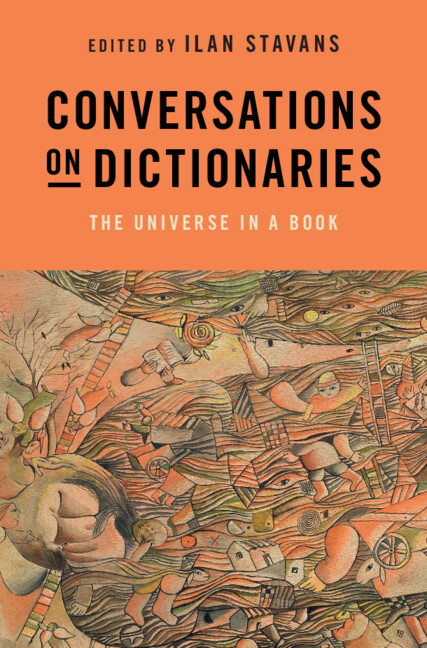
Today I want to highlight the fourth of five essays that have been published this year. (Three others already mentioned here, here, and here.) This particular publication is something a bit different from the others, all of which relate to the Septuagint in some way. This one is related to dictionaries, of all things.

This volume is edited by Ilan Stavans, who is Lewis-Sebring Professor of Humanities and Latin American and Latino Culture at Amherst College. A few years back, he asked me to contribute a chapter focused on ancient Greek to this collection of essays.

The book is titled rather accurately for its somewhat unconventional approach. Essentially, each chapter is structured as an interview or conversation between Stavans and another scholar. And each chapter addresses the history of dictionaries for a particular language. In addition to my chapter, there are others on German, English, Esperanto, and several others. This project was a lot of fun and allowed me to go further into the history of philology on the biblical languages.