Philology

(Virtual) Oxford Septuagint Seminar, 27 May

Details for the next seminar, available virtually, are as follows for tomorrow:

Oxford Septuagint Seminar

27 May | 2:00 PM (BST)

Dr Camilla Recalcati “The Septuagint in Ptolemaic Egypt: A Papyrological Approach”

Dr. Camilla Recalcati is a Postdoctoral Fellow at Ben-Gurion University and Bar-Ilan University whose research explores the Septuagint, its linguistic features, and the multicultural Jewish world of the Hellenistic Mediterranean. Author of The Egyptian Background of the Septuagint and co-chair of the EABS research unit on Papyrology and the Biblical World, she is currently a Visiting Fellow at the Oxford Centre for Hebrew and Jewish Studies.

Join Zoom Meeting

https://us06web.zoom.us/j/89232588036 

Meeting ID: 892 3258 8036

Passcode: 443561
New Publications: Part 5

Mostly as a way to take a break from grading, I’m taking some time today to write about the fifth of five essays that went to press in 2025. I posted about four others hereherehere, and here.

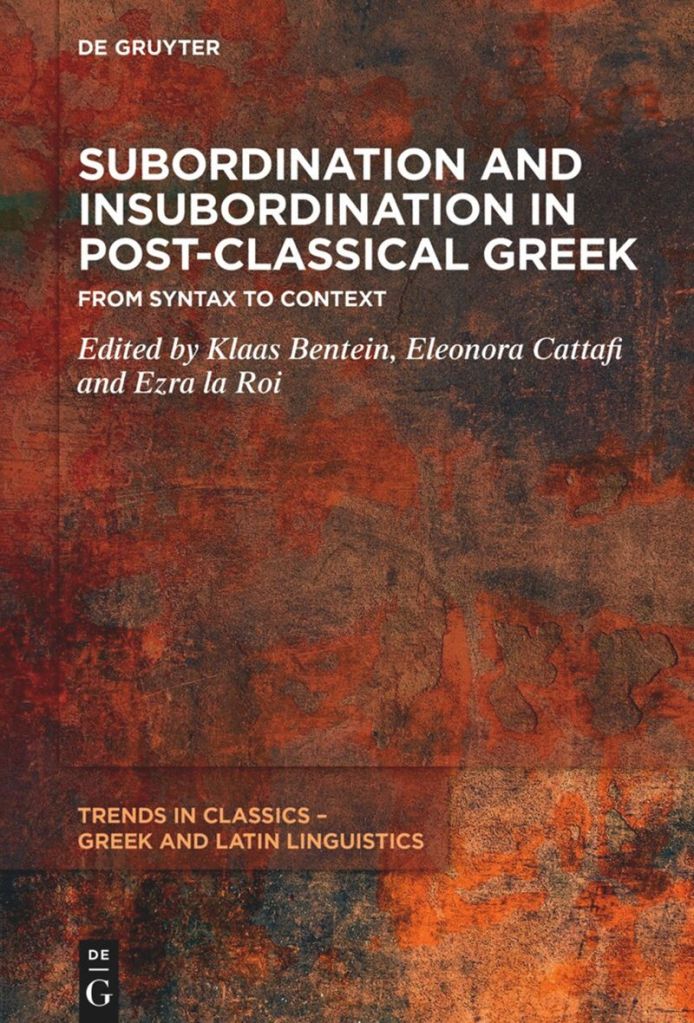
This fifth essay is entitled “Reevaluating Parataxis in the Septuagint.” It appears in Subordination and Insubordination in Post-Classical Greek: From Syntax to Context, edited by Klaas Bentein, Eleonora Cattafi, and Ezra La Roi (De Gruyter Brill, 2025). This edited volume originated in a conference held way back in May 2022 at Ghent University. Although I was unable to attend in person, my friend and colleague Andrew Keenan read an early version of this paper for me.

(more…)

New Publications: Part 4

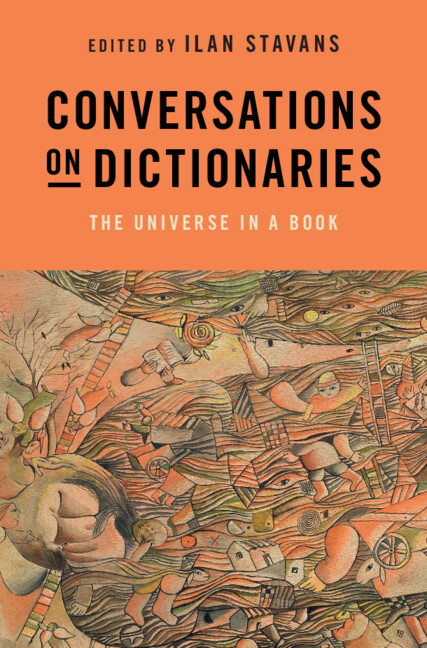
Today I want to highlight the fourth of five essays that have been published this year. (Three others already mentioned here, here, and here.) This particular publication is something a bit different from the others, all of which relate to the Septuagint in some way. This one is related to dictionaries, of all things.

This volume is edited by Ilan Stavans, who is Lewis-Sebring Professor of Humanities and Latin American and Latino Culture at Amherst College. A few years back, he asked me to contribute a chapter focused on ancient Greek to this collection of essays.

The book is titled rather accurately for its somewhat unconventional approach. Essentially, each chapter is structured as an interview or conversation between Stavans and another scholar. And each chapter addresses the history of dictionaries for a particular language. In addition to my chapter, there are others on German, English, Esperanto, and several others. This project was a lot of fun and allowed me to go further into the history of philology on the biblical languages.