Miscellaneous

To the Old Country

Over the past few months I have been keeping a fairly regular pace to my blog posts, usually adding one every two weeks (or “fortnight”) on Mondays. In that spirit, I wanted to post something today, on schedule. Seeing, however, that tonight I am boarding a plane with my wife and two children – plus three suitcases, three carry-ons, a stroller, a car seat, &c., &c. – bound for England on a one-way ticket, I thought a more personal entry might be appropriate (and manageable).

Some of you may have happened upon my more personal “family” blog already, here. We’ve already begun chronicling some of the biggest preparatory hurtles we’ve dealt with the past few months. Main features have been items like, say, having a second child, selling our car, finding a home in Cambridge, and obtaining visas. It has been a very full summer, and I have only barely been thinking much about things academic (!).

We decided to get over to England about as early as the authorities would allow. Considering that we have an 8-week-old with us, plus a highly energetic two-year-old, it seemed best to squeeze in as much adjustment time as possible. So after we arrive I will have about four weeks until Michaelmas term begins, and my work gets under way.

We are very excited, and of course I am quite enthusiastic about my upcoming research at Cambridge. I will hopefully keep this site filled with interesting things along the way. With that in mind, my next posts will be a two-part series entitled “How to Attend Biblical Studies Conferences – A Guide for Students,” so watch for it in a few weeks.

Tally ho!

Life Begins in the Garden

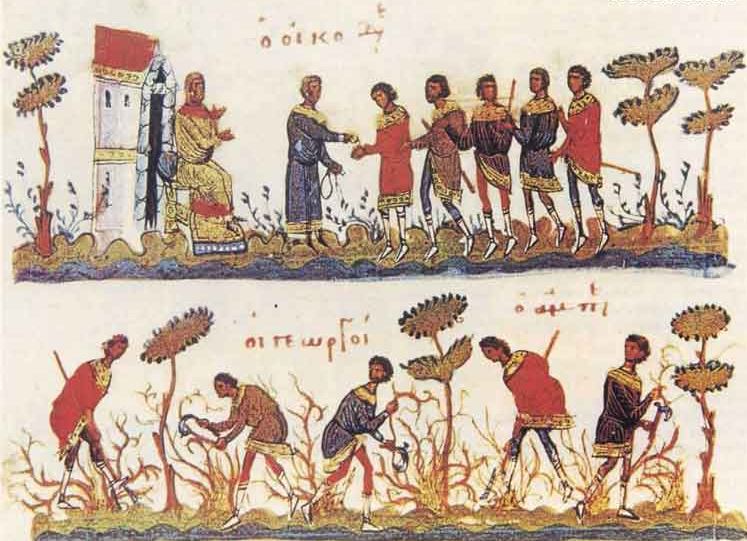
There is a sign dangling in my neighbor’s yard by the flower beds that reads “Life Begins in the Garden.” farmersWhen I saw the sign the other day, I thought “How true.” As I’ve thought about it more since then, I have realized just how remarkably profound and thoroughly Christian the statement is. Naturally, Chesterton puts it best:

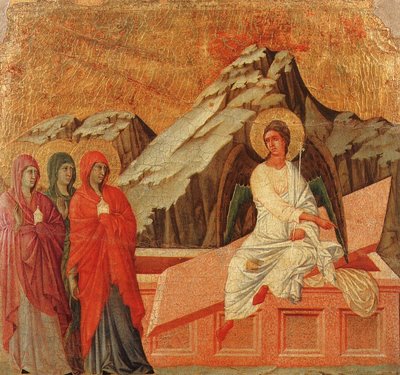
“On the third day the friends of Christ coming at daybreak to the place found the grave empty and the stone rolled away. In varying ways they realised the new wonder; but even they hardly realised that the world had died in the night. What they were looking at was the first day of a new creation, with a new heaven and a new earth; and in a semblance of the gardener God walked again in the garden, in the cool not of the evening but the dawn” (The Everlasting Man [Dover, 2007], 207).

Life began in Eden at creation, and began anew at the garden scene of the resurrection (cf. Gen 2:8; John 20:15). As Fred Putnam points out, one of the commonest metaphors used of God in Scripture is that he is a farmer (e.g. Ps 80:8-9). Conversely, people are plants (e.g. Ps 1:3). When the True Vine revives after the winter of divine abnegation, he offers life to those grafted into him by the Fatherly Vine-dresser.

Easter, MMXIV

Duccio di Buoninsegna, 1308-1311


Happy International Septuagint Day

You’ll be glad to know that you have not missed it. Today is the eighth celebration of this great day, which was instituted in 2006 by the International Organization for Septuagint and Cognate Studies (IOSCS).

The rationale behind the date apparently comes from Robert Kraft’s observation that the date is the only one we have record of being historically related to the Greek Scriptures. In a document dating to February 8th, 533 C.E. the Emperor Justinian, announces permission for public reading of Jewish Scriptures in the Roman Empire. He proclaims his approval of any language, but where Greek is used he states that “those who use Greek shall use the text of the seventy interpreters [i.e. the LXX], which is the most accurate translation, and the one most highly approved…” An English translation of the novella is available here.

There are many reasons to love the Septuagint – not least of all the wide variety of options for pronouncing the word itself (sep-TOO-a-jint, sep-TOO-a-gint; SEP-too-jint; SEP-too-gint; SEP-twa-gint; and on and on). It is a greatly under-valued aspect of the heritage of the Christian religion, since it was (and is) an integral part of the formation of the Old Testament as we read it in our ESVs and NIVs. If we really want to access the most original form of Old Testament scriptures, the LXX is critical to that task since it often preserves older readings, as more biblical scholars are realizing. It also paved the way for the New Testament by furnishing an accessible corpus of scripture (and theology?) to draw upon for the apostles and early church. The LXX is an amazing artifact in its own right, too, a monument to the language, religion, and society of Ptolemaic Egypt. Oddly, more than being ignored in much of biblical scholarship, it is ignored by scholarship concerned with Hellenistic Judaism as well.

So, to help turn the tide, and in the spirit of the “most highly approved” Greek translation, consider reading an excerpt from the LXX today. PDFs of the New English Translation of the Septuagint (NETS) are freely available here. Or, you might consider reading an accessible introductory work such as T. Michael Law’s When God Spoke Greek (reviewed in many places, but currently receiving a “dialogic” review here), or Müller’s The First Bible of the Church: A Plea for the Septuagint.