 My work in Old Testament studies focuses upon the Greek version known as the Septuagint. Consequently, if not somewhat paradoxically, a very large part of my Old Testament work deals with Koine Greek. For that reason, and because I am more generally interested in the study of linguistics, it is always exciting when a new Greek grammar emerges. (I love a new Hebrew grammar, too, but those are so much less frequent for some reason…)
Andreas Köstenburger, Benjamin Merkle, and Robert Plummer have co-authored Going Deeper with New Testament Greek: An Intermediate Study of the Grammar and Syntax of the New Testament (B&H Academic, 2016). As the title indicates, this grammar is intended for those beyond a beginner course, and therefore focuses on a range of topics that are more advanced in nature. At first glance, the Table of Contents offers a number of headings that are refreshing to see. For instance, coverage of textual criticism, word studies, and treatment of textual units at the sentence level and above.
When I review books on this blog, I like to dovetail with the emphases in my own research, rather than providing the more general (read: dull) summary/critique-style reviews found in journals (plenty of which I have written). So here I’ll be offering some thoughts on what Köstenburger, Merkle, and Plummer (hereafter, “the authors”) have to say about 1) the Greek language, and 2) word studies. Most of what my dissertation focuses on is Koine lexical semantics and language change, so that seemed appropriate. From what I read in the Preface, this means I’ll be interacting mostly with the work of Rob Plummer, main author of these sections.
The Koine as a Language
Sometimes you will find scholars – usually in older literature – using the phrase “the Koine.” At first I found this funny because I was used to hearing it called simply “Koine Greek” or just “Koine.” After spending a few years thinking about it, though, I see the sense in the definite article in the phrase “the Koine.” After all, the historical phase of the Greek language known as κοινή (sometimes also “Hellenistic” or “postclassical” or even “postdialectal” Greek) was precisely that: a phase, or a stage in its history. Saying “the Koine” reminds us of that, although we should also remember that it was a long and internally diverse phase with its own features.
Many times New Testament Greek grammars insufficiently convey that the language of the New Testament existed within this larger phase of the Koine. In fact, the very phrase “New Testament Greek,” much like “Septuagint Greek” or even “biblical Greek,” can give the wrong impression that these are somehow unique and self-contained “languages.”
Happily, you do not get that impression from Going Deeper with New Testament Greek. Rather, the authors do a very good job of acknowledging how Greek was “in transition at the time of the NT” (p. 18). They state that
an understanding of the way in which the Greek language evolved will guard against simplistic and erroneous approaches that fail to see the Greek language used in the NT as a snapshot of a changing language (p. 19).
They go on to divide up the history of the Greek language into the following stages:
- Proto Indo-European (? – 1500 BC)
- Linear B/Mycenaean (1500 – 1000 BC)
- Dialects & Classical (1000 – 300 BC)
- Koine (300 BC – 330 AD)
- Byzantine (330 – 1453 AD)
- Modern (1453 – present)
These stages are then given short treatments in the following pages. Appropriately, they call attention to the fact that, much like the Koine, “Classical Greek” was not actually a monolithic thing. For that reason, A. T. Robertson among others called it the “Age of Dialects,” including Ionic, Doric, Aeolic, Attic and others. I appreciated the acknowledgement that the authors of Going Deeper make of the many older NT grammars and lexicons that relied upon knowledge of Classical Greek, something that most seminary students no longer bring to the table! (I certainly didn’t.)
Of course, when discussing the Koine, the authors rightly point to the conquest of Alexander the Great and his subsequent cultural and political hegemony. Some attention is also given to the predominant influence of multilingualism in this period. Naturally, when you take over the world and impose a new language, it will be a “second” language for most people. But the Greek that developed in the ancient Mediterranean world was remarkably uniform, judging by the evidence now available. That is why it was called the κοινή διάλεκτος – the “common dialect.”
It is important (and too often ignored or forgotten) to note that the “common” of κοινή does not mean “simple” or “crude,” but simply shared. The authors of Going Deeper may have confused this point, or at least could have made things clearer when they state that Koine (the “common dialect”)
is well preserved in innumerable papyri and in the writings of the NT (p. 21)
That is certainly true. However, because these sources (papyri and the NT) generally consist of the “lower” register, I am tempted to think that “Koine” as a whole is construed here as “low.” Koine was not a “corruption” of Classical Greek, something that somehow brought the “quality” of Greek down a notch. Koine was simply the next thing in the history of the language, and in fact there were “higher” and “lower” linguistic registers within Koine Greek. The Septuagint and Greek NT (along with many papyri) generally fall towards the lower, or more vernacular end of that spectrum. But Koine authors like Polybius and Philo are more literary and are a “higher” register of Koine.
I assume that the authors of Going Deeper know this, but I often find statements like the one above that are easily construed as if Koine Greek as a whole is low register compared to Classical (which is not a very useful comparison to make). Thankfully, the review of “terms” for Koine Greek on pp. 21-22 of Going Deeper seems to indicate that the authors understand the point I am making here.
Word Studies
I was interested to see how Going Deeper would approach word studies. These can get a bad rap in scholarship and in Christian biblical studies circles (kind of like a lexical version of proof-texting). I think the reason for this is twofold:
- Usually scholarly word studies are terrible, woefully incomplete or flawed and thus entirely unhelpful.
- Pastors tend to do them, usually very poorly, and often draw far-flung and erroneous conclusions.
Call me a skeptic. I call myself a lexicologist. Now, lexical semantics can get pretty complicated and abstract in a hurry. There is a swathe of approaches, each with its own range of terms. That said, it is important to have conceptual clarity and precision when talking about word meaning precisely because it is a slippery thing.
I felt that, overall, Rob Plummer’s chapter on word studies (Ch. 14, pp. 475-90) does a good job being both accessible but methodologically precise. You can’t cover absolutely everything in a chapter like this, but I was hoping for some more clarity specifically for the terms used for word meaning, which is where most people go awry on this topic. Plummer uses phrases like “range of meaning,” “specific meaning,” “potential meaning” to describe how words “work,” but does not offer much elaboration on what he means by “word meaning” in these terms. I know this is abstract, but that’s the exact reason that clear terminological description and consistency is so important for the study of lexical semantics in Greek (or any language). I don’t think this detracts from the value of this chapter, but it is something that could potentially leave readers wondering.
I also happen to disagree with Rob where he says “Never in the history of the world has there been less need for Greek word studies than in the twenty-first-century English-speaking North America” (p. 476). Perhaps this is a defense mechanism on my part :). If by this he means there are more resources now available than at any time before, then certainly that is true. However, I happen to think that the study of Greek lexicology is in need of a fairly major overhaul. (If you’re interested in why, read John Lee’s excellent book on the topic). This is an area I’d like to continue research in personally, particularly since much of the ossified lexical data passed on from one lexicon to the next can now be significantly supplemented with documentary evidence not yet incorporated into the reference works. If we are serious about knowing what Greek words mean(t), particularly those of the NT, we make a serious error by ignoring this data (Of course, I am not suggesting that is what Going Deeper proposes). On the contrary, I think the need is as great as ever!
Where I resoundingly agree with Dr. Plummer, however, is when he rightly makes the following caution:
A pastor should never undermine the congregation’s trust in the English Bible translations through comments such as ‘The ESV gets this really wrong here” or “I can’t believe the NIV says…” It is arrogant and detrimental for the pastor to present himself as the infallible pope of Bible translation.
May more pastor-scholars heed this advice! The rest of the chapter goes on to give quite a good bit more good guidance for undertaking word studies. The principles outlined include:
- Prioritize Synchrony over Diachrony – here the importance of contemporary meaning and semantic shift is highlighted, along with the dangers of the etymological fallacy (i.e., thinking the history of a word’s meaning has any necessary link to the word’s current meaning – it doesn’t).
- Do Not Confuse Words and Concepts – the danger here is that not every instance of a word refers to the same concept (e.g. “bank” meaning side of a river vs. “bank” meaning financial institution), and not every instance of a given concept is prompted by the same word (e.g. “speech” and “oration” both refer to one concept of public speaking).
- Do Not View Word Study Tools as Inerrant – Jackpot! I loved to see this. Lexicons are not infallible (on which see this post).
I was also glad to see some excellent (annotated) recommendations for resources to conduct word studies, and a very practical step-by-step guide for actually doing one and presenting the results with clarity. For those not actively engaged in critical study of lexical semantics (for which a host of other considerations are necessary), it is well worth consulting as a student, pastor, and even as a scholar.
Other Thoughts
A. T. Robertson
There is an absolutely delightful tribute to the esteemed New Testament scholar A. T. Robertson at the front of this grammar that is well worth reading. I particularly enjoyed and agree with Robertson’s view that the seminary is first and foremost the place for training preachers and teachers of God’s Word, and secondarily for producing scholars. Yes, seminary must be a rigorously scholarly exercise, but that is a means to an end. As Robertson says,
The most essential thing to-day is not to know what German scholars think of the Bible, but to be able to tell men what the Bible says about themselves. And if our system of theological training fails to make preachers, it falls short of the object for which it was established.
That is a refreshing and motivating statement to someone like me, who is at the moment in the thick of the academic enterprise almost exclusively, but which is ultimately in service of the Church.
___________________
Thanks to B&H Academic for providing a gratis review copy, which has not influenced my opinion of the book.
 About two weeks ago I returned from Wuppertal, Germany, where I participated in the 6th International Conference for the Septuaginta Deutsch research project.
 During the course of the next two days the lectures split into three simultaneous sessions of two papers apiece. What was really nice about this conference was the pace of it all. Between each paper there was a fifteen minute break, and between each session there was either a coffee break or lunch. The benefit was to allow for conversation about the papers, exchanging ideas, and, of course, fueling up on caffeine.
 Not only that, but evidently it is a long-held tradition at this conference to sing. A few people bring their guitars and eventually a small crowd accumulates to belt out whatever songs come to mind (I heard everything from Bob Dylan to Russian folk songs to the Beetles).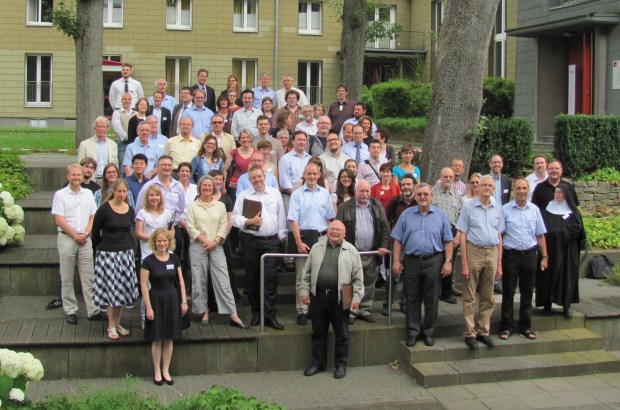
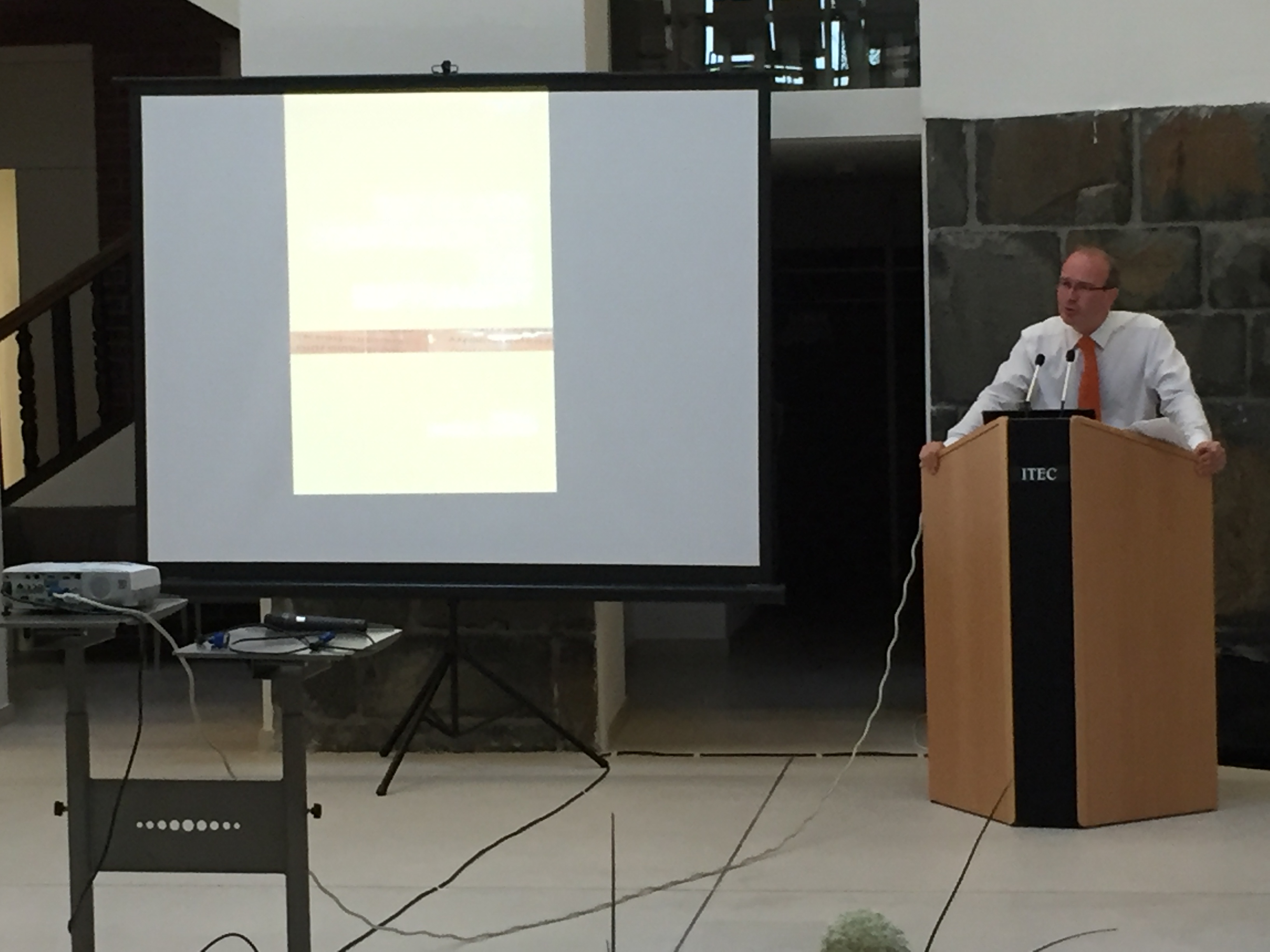

 Of course, I also presented my work. Overall I would say it went well. The audience seemed to receive it fairly, and offered a good range of questions to help refine my thinking.
 Old Testament scholarship is pretty obscure stuff for most people on the street. But mention the word “Septuagint” and you’ll usually get even more muddled looks and occasionally a “God bless you” in puzzled response. Well, things don’t get any better from there as you get into sub-fields of this sub-discipline.
  Although the page is sadly out of date,
  I was pleased to get the opportunity to participate in this year’s conference.
 Septuaginta &c.