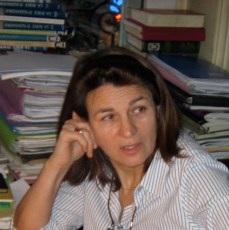
Today is yet another installment in my series of interviews with notable scholars in Septuagint studies. I am very pleased to introduce today’s featured scholar, Dr. Cécile Dogniez, part of the Antiquité classique et tardive (Classical and Late Antiquity) research center at the Université Paris-Sorbonne. Inaugurated by Dr. Marguerite Harl in 1984, this group is now headed up by Dr. Olivier Munnich.
Dr. Dogniez’s research is focused upon the Greek bible and Hellenistic Judaism, and she is very active in the scholarly community both in France and elsewhere.  Some of her better known work in the realm of Septuagint studies is as an editor and contributor to La Bible d’Alexandrie and various roles in the IOSCS and its affiliate projects.
Now, Dr. Dogniez was gracious enough to do this interview for us in French. In order to make it most widely readable, however, I have translated her manuscript into English. If you prefer to read her interview in French, you can do that here.
The Interview
1) Can you describe how you first became interested in LXX studies, and your training for the discipline?
I originally received a classical education at the Université de Tours where I completed an MA (Master I) on Herodotus under the supervision of Gilles Dorival,  himself a student of Marguerite Harl at the Université de la Sorbonne. A few years later, he suggested that I apply for a position at the CNRS (Centre National de la Recherche Scientifique [National Center for Scientific Research]) to work with Marguerite Harl on the Septuagint, and specifically the French translation project of this “Greek Bible,” which I had never heard of before. A professor of Greek Patristics at the time, Marguerite Harl had continually interacted with the Septuagint as a major reference text for the Greek Fathers of late Antiquity and Jewish authors like Philo of Alexandria, [and] extensively quoted by Christian theologians. She was reading, translating, and commenting on it with her students at the Sorbonne.
 Astonished by the ignorance – at least in France in the ’50s into the ’80s – of this important Jewish text written in Greek, she undertook, with the encouragement of Dominique Barthélemy, to offer the French reader an annotated French translation of the Bible. So I collaborated on the first volume of La Bible d’Alexandrie series [BdA], Genesis, published in 1986 by Editions du Cerf. In 1987 I completed my PhD at the Sorbonne in Greek Studies on the Septuagint version of Deuteronomy, and in 1992 I coauthored with Marguerite Harl volume 5 of La Bible d’Alexandrie on the same book. Our close daily collaboration, conducted at the Sorbonne or at her home, where I spent hours (invaluable for me to my research training in the field of Septuagint studies) reading the Greek text of the Bible,
  and benefiting from her not-yet-published research, continued well beyond her retirement. Marguerite Harl provided me with so many insights, and I gained such clarity from her deep familiarity with the texts! (Que de clés Marguerite Harl ne m’a-t-elle pas données, que de lumières n’ai-je pas reçues de sa science généreuse!)
2) How have you participated in the discipline over the course of your teaching and writing career?
In addition to my work on La Bible d’Alexandrie, I undertook the task of continuing the bibliographical work started by Sebastian P. Brock, Charles T. Fritsch, and Sydney Jellicoe, who had edited in 1973 the first bibliography of the Septuagint dealing with the period from 1900 to 1969. My book, Bibliography of the Septuagint (1970-1993) (Vetus Testamentum Supplements 60), was published by Brill in 1995, with a preface by Pierre-Maurice Bogaert. To create this bibliography, I benefited from the erudition and scholarly generosity of a good number of Septuagintalists, both in France and abroad, where scholars such as Sebastian P. Brock, Florentino García Martínez, Maurice Gilbert, Takamitsu Muraoka, Emanuel Tov, Arie van der Kooij, Natalio Fernández Marcos and John W. Wevers patiently advised me at various stages of my work and provided valuable assistance.
 It was around this time that I began to work on the corpus of the Twelve Prophets. My first presentation at an international conference, the 9th Congress of the IOSCS in Cambridge (July 1995), focused on the use of the term παντοκράτωρ, of which the Twelve Prophets provide the largest number of occurrences to render the Hebrew expression “God of armies/hosts” [אלהי־צבאות].
Subsequently, in addition to my participation in the publication of 2 volumes in La Bible d’Alexandrie on the book of the Twelve (Joel, Obadiah, Jonah, Nahum, Habakkuk, and Zephaniah released in 2007), I had several articles published on the Twelve Prophets, while maintaining my interest in the Pentateuch.
3) How have you integrated LXX studies into your work as a professor?
As a researcher, in France, I am not required to teach. However, for several years, from 2006 to 2013, I taught the Septuagint at the EPHE (Ecole Pratique des Hautes Etudes) in Paris,  as part of a seminar on the history of Judaism during the Hellenistic and Roman period. Starting with readings from the Prophets, I proposed to explore issues related to the linguistic and historical aspects of the Greek text. I was also occasionally able to lead a seminar on the Septuagint in various other French or foreign universities, such as Lille, Metz or Lausanne. These last few years, I have been responsible, with Bruno Meynadier, for the organization of conferences on the Greek Bible of the Seventy in Paris (at the Ecole Normale Supérieure de la rue d’Ulm, then at the Maison de la Recherche), conferences created during the 1980s by Marguerite Harl and continued under the leadership of Gilles Dorival and Olivier Munnich.
4) How has the field changed since you’ve been involved?
Septuagint scholarship has, in my opinion, developed significantly since the 1980s. In France, the Septuagint was often ignored and of little interest because it was considered an inaccurate (infidèle) translation and also written in bad Greek – in any case for a good number of Classically-trained Hellenists. But it was also a text still rarely taken into consideration within the Catholic Church in particular, which only recognized the Vulgate and therefore the Hebrew text, and also in contemporary Jewish contexts, where this Jewish Bible was voluntarily abandoned to Christians because they believed they had been dispossessed of it at the beginning of the Christian era.
Furthermore, the idea of translating a translation seemed to some like nonsense. Now it happens that, following La Bible d’Alexandrie series (a pioneer in this area), other translations followed. In English we have NETS, in German we have the LXX.D, in Spanish under the leadership of Natalio Fernández Marcos [La Biblia Griega], in Italian, in Romanian, and some that I am certainly forgetting.
The perspective for studying the Septuagint has also changed, especially since the Qumran discoveries. These demonstrated that the LXX can no longer to be considered an isolated, unfaithful text, but rather a witness to the fluidity of the Hebrew text.
Finally, modern research in translation theory has likewise been profitable for the LXX. In France, for example, the LXX was part of the discussions at the [annual conference of the] Assises de la traduction littéraire in Arles.
5) For the benefit of graduate students who are potentially interested in LXX studies in doctoral work, what in your opinion are underworked areas and topics in need of further research?
Currently, it seems to me that the books of the Septuagint have all been more or less studied, although some certainly more than others. But there is still work to be done, either book by book or in the area of textual criticism, historical, linguistic, literary, stylistic or exegetical research. For example, in addition to constant and increasingly important recourse to papyrology and epigraphy in order to acquire a better knowledge of the language of the Septuagint, the study of poetics, of the stylistics of the Septuagint deserves, it seems to me, more attention. The historical context of the production of these different translations should probably also be further studied. Perhaps we would then end up, among other things, with a more precise chronology of the various books of the LXX.
6) What current projects in Septuagint are you working on?
As the co-director of La Bible d’Alexandrie series, I am currently overseeing the annotated translation of 2-3 Reigns. I also participate in a project on the topic of the personification of Wisdom undertaken by Stéphanie Anthonioz at the Université de Lille, in particular in the book of LXX-Proverbs. I just recently finished a study on “Moses in the Greek Bible” for a project entitled Die Idee des Mose – Eine rezeptionsgeschichtliche Betrachtung einer identitätsstiftenden Idee, under the direction of V. Niederhofer, E. Eynikel and M. Sommer. I am currently writing a presentation on the Greek translation of the Pentateuch for a Handbook of the Pentateuch directed by J. Baden and C. Nihan. Finally, I continue to serve as a member of the editorial board of two international journals, JSCS and Semitica et Classica, which also regularly publishes articles on the LXX.
7) What is the future of Septuagint studies?
It is good that young people are interested in the LXX and hopefully new recruits continue on this path. It is probably advisable that they would preferably be trained in Classics, since the Greek of the LXX rightfully belongs to the Greek language and the history of the LXX to the history of Judaism in the Hellenistic era.
Wrapping Up
I am very grateful to Dr. Dogniez for her time and willingness to do this interview. I hope you found it as useful and informative as I did. In future interviews, you can look forward to hearing from more senior scholars in this important discipline.
_________________
My sincere thanks to Jean Maurais for his helpful input on my English translation of this interview.
 As much as it pains me to admit it, one of the top-tier locations for the study of the Septuagint is the Oxford Centre for Hebrew and Jewish studies (CHJS), which has been in existence now for almost fifty years. The focus of the Center is to promote education, scholarly research, and publication that embraces “the full scope of Hebrew and Jewish Studies from antiquity to the contemporary world.”
 the Leopold Muller Memorial Library and the Bodleian Library in Oxford. As it’s title indicates, the focus of this project is focus upon political and religious vocabulary used in the Septuagint and situate it within the Jewish Hellenistic context. This undertaking will bring together study of literary Greek in the Classical and post-Classical periods with investigation of the rich lexical evidence from Ptolemaic papyri and inscriptions. This is a lively area of research in Septuagint scholarship at the moment (and the one upon which my own dissertation is focused), so the results of this seminar should be very fascinating.
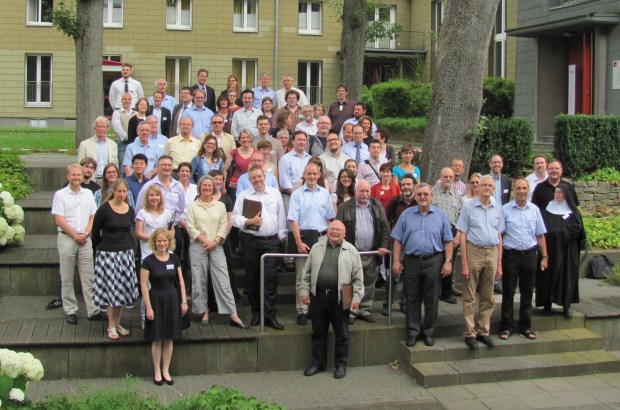
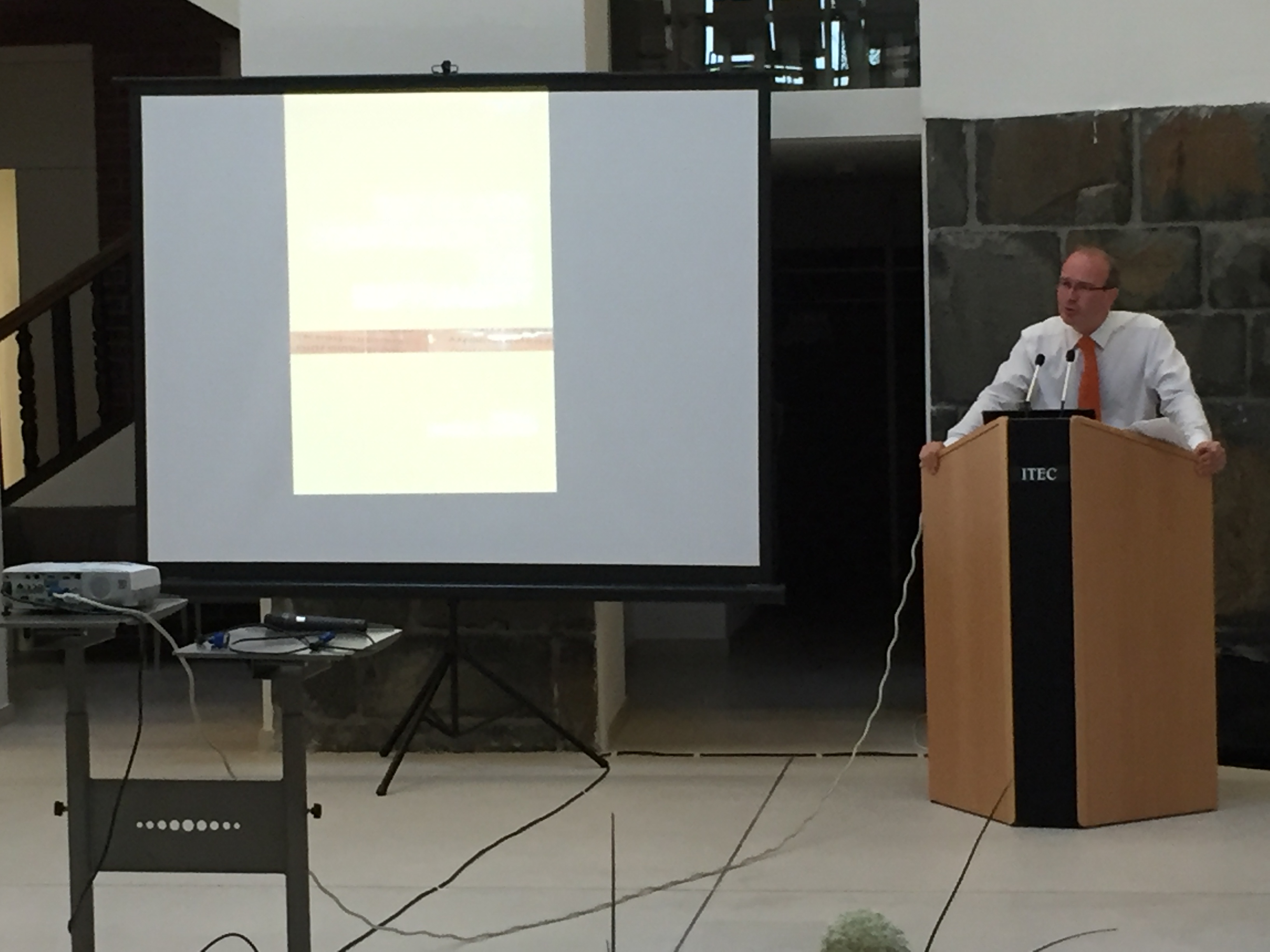
 About two weeks ago I returned from Wuppertal, Germany, where I participated in the 6th International Conference for the Septuaginta Deutsch research project.



 Septuaginta &c.