It has become one of my favorite tasks for this site to put together a post for my Septuagint Scholar Interview series. It’s always a pleasure to learn more about others who have been active in the field for some time. We are now on the fourth installment, and if you pop over to the interview page using that link up there, you’ll see that I have a few others lined up that should be interesting reading.

Dr. W. Edward Glenny
But today we have a great interview with a real, live Septuagint scholar, Dr. W. Edward Glenny. I met Ed several years ago at an IOSCS session at the SBL national meeting, and we have gotten to know each other through that venue ever since. Ed and his wife also spent several months at Tyndale House, Cambridge, where I conduct my research, so he has become a good friend. He is also a fellow member of the steering committee for the brand new Septuagint Studies session at the annual ETS national conference.

The Interview
Without further delays, let’s hear from Ed.
1) Can you describe how you first became interested in LXX studies, and your training in the discipline?
 My first contact with the LXX was through a class on the LXX with Allen Ross during my doctoral program at Dallas Seminary. I audited the course with Dr. Ross, and it was partly because of that course that I wanted to write a dissertation on the use of the OT in the NT for my doctoral program at Dallas. I began to use the LXX in my dissertation at Dallas on the use of the OT in 1 Peter. After I finished that project I felt like I wanted to learn more and improve my language skills further, so I enrolled in a graduate program in classics at the University of Minnesota. I majored in Greek, and my second ancient language was Hebrew. So, with my emphasis on those two languages the LXX was a natural topic for my dissertation at Minnesota, and I wrote on the translation technique in LXX-Amos. That dissertation was published in Brill’s Supplement to Vetus Testamentum series (Finding Meaning in the Text: Translation Technique and Theology in the Septuagint of Amos), and it was really my entry into LXX studies. I was able to spend time at Tyndale House at Cambridge University while I was researching and writing my dissertation on the LXX, and Robert Gordon and some of his students who were working in the LXX were a great encouragement and help to me in my work.
2) How have you participated in the discipline over the course of your teaching and writing career?
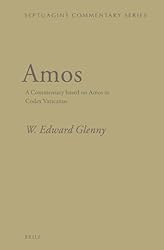
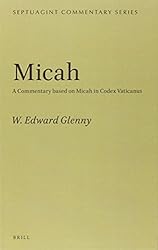 I have presented papers in the IOSCS section at the annual SBL meetings, and I have also presented at the triennial international meetings of the IOSCS. I have also had the privilege to write several book reviews, articles, and books on the LXX. In addition to my dissertation I have published three commentaries in Brill’s Septuagint Commentary series, the commentaries on Hosea, Amos, and Micah. Among other articles, I contributed the article on the Introduction to the Twelve in the LXX in Brill’s forthcoming work The Textual History of the Bible. In the days ahead I am looking forward to writing several other volumes for Brill’s Septuagint Commentary series, as well as a handbook on the LXX of Amos for Baylor University Press.
4) How has the field changed since you’ve been involved?
I think that I can give a general answer to this question.  The field is becoming more sophisticated and complex, and scholars continue to build on the work of previous generations and go to greater levels of depth in the study of the LXX text. Continued study has resulted in more comparison of the LXX with other contemporary literature and with more detailed studies of the Septuagint itself.
5) For the benefit of graduate students who are potentially interested in
 LXX studies in doctoral work, what in your opinion are underworked areas and topics in need of further research? I think that the area of translation technique is one of the most important areas of research that will continue to provide opportunities for work in the LXX for years to come. This is because the study of translation technique is wide-ranging and complex and can be applied to a LXX text in many different ways.
6) What current projects in Septuagint are you working on?
My main LXX project right now is a review of the T&T Clark Companion to the Septuagint, edited by James K. Aitken. I published a commentary on LXX-Micah in early 2015, and now my main project is a New Testament commentary (1 Peter). But as I mentioned above I am looking forward to working in earnest on the LXX again in a year or so.
7) What is the future of Septuagint studies?
The future of Septuagint studies is very bright! There are many young scholars working in this area, and previous generations of scholars have provided them with some excellent tools to use in their studies and more LXX resources and studies are being published every year. I anticipate that the field will continue to grow and flourish.
Wrapping Up
Thanks to Ed for being willing to answer these questions! As I mentioned, stay tuned for further interviews in the near future. If you have a suggestion for a later interviewee, or a question you’d like to see added, please let me know in the comments.
 Today I wanted to focus on something that I mentioned back in my
 Septuaginta &c.