 Septuagint scholars everywhere are rejoicing to finally have a brand new, full grammar of the Greek Old Testament at hand. Although it is still being released in fits and starts from what I hear, Muraoka’s A Syntax of Septuagint Greek is finally shipping. Adding to the momentousness of this occasion beyond its significance for LXX studies is the fact that it has also been over a century since any reference grammar on Koine Greek per se has emerged (i.e., Koine beyond the NT).
There are only two other resources in existence that attempt to do what Takamitsu Muraoka has done for the Septuagint. I say “attempt” because both are incomplete in some sense. Moreover, both are quite old, which while not bad in itself, means that more recent linguistic approaches to grammar are, well, not there.
First, there is H. St. J. Thackeray’s A Grammar of the Old Testament in Greek According to the Septuagint (1908). It’s a classic work, and usually quite useful. However, Thackeray only ever completed Volume 1: Introduction, Orthography, Accidence.
Secondly, we have F. C. Conybeare and G. Stock’s Grammar of Septuagint Greek (1905, but now in an updated version), which is also helpful. But it is very terse and assumes a significant amount of knowledge on the reader’s part, especially of Classical Greek. The actual grammar only runs for the first 100 pages, followed by about 300 more pages of selected readings.
Needless to say, it’s likely that no one has attempted to write a grammar of the Septuagint in over a century because of the outrageous enormity of the task.
Except Takamitsu Muraoka.
Impressions of the Grammar
The paragon of industry, Muraoka started working on this project when he was 74 years old. Ever since his “retirement” in 2003, Muraoka has steadily produced a range of detailed and technical resources for ancient languages like Syriac, Aramaic, and Greek. Much of his work has focused upon the Septuagint, resulting in a lexicon, Greek-Hebrew/Aramaic index, and now a full grammar.
Weighing in at 904 full, 8.5×11 pages, this book is ridiculously gigantic and will definitely scare away your friends. Just the Table of Contents itself is twenty-seven pages long. I am not going to give a full review of the book, but will focus on what Muraoka says about the Greek of the Septuagint in the introduction, then give a few thoughts on the book in general.
The Koine Greek of the Septuagint
One of the things Muraoka points out is how the Septuagint itself is a massive repository of non-literary Koine Greek, perhaps as significant as the pre-Christian documentary evidence for our understanding of the language. Not only is this significant in terms of volume, but also of completeness. That is, the Septuagint is non-fragmentary, unlike many papyri and inscriptions, so we have much more to work with in grammatical description. This is a delightful perspective that is pretty much ignored by every other Greek scholar out there, who typically dismiss “LXX Greek” as some kind of “contaminated” or “illegitimate” Greek because it is a translated text.
But Muraoka emphasizes that Septuagint Greek “basically reflects the pre-Christian Hellenistic Greek” of its time, not a “peculiar jargon” of Alexandrian Jews (p. xxxvii). While it does contain unconventional features in vocabulary and syntax owing to source language interference, Muraoka stresses the need to strike balance in one’s analysis the language of the Septuagint. We should not overemphasize the prominence of these phenomena, lest we mistake Septuagint Greek as a “philological Cinderella for Hellenistic Greek” and miss an opportunity to better understand the latter (p. xxxviii). [Note, Muraoka uses “Hellenistic” and “Koine” interchangeably].
Muraoka believes the Septuagint was produced with public, rather than cultic or personal, readership in mind, and therefore finds it unlikely to have been “written in colloquial, conversational, informal Greek of the streets” (p. xliv). I was a little puzzled by this statement in light of what Muraoka says elsewhere. Judging by the number of qualifiers, I think Muraoka is taking a defensive position here against the often-disdainful characterization of Septuagint Greek as “vulgar” or as a Volkssprache, especially by Classicists (ibid.). Muraoka goes on to say that the translators could also “rise to the occasion and write as elegantly as some contemporary writers … such as Philo or Josephus” (ibid.). As far as I can tell, then, Muraoka seems to wish to say that on the one hand, Septuagint Greek is not like the literary Greek of its era (a fact that does not necessarily reflect upon the capability of the translators), yet neither is it completely devoid of literary qualities. As my supervisor James Aitken has pointed out, this is true of many of the contemporary papyri that we see, for instance, in the Zenon Archive: we find “bursts” of literary style amidst otherwise prosaic but comprehensible written correspondence.
Furthermore, although there is no way to prove it short of emerging evidence, Muraoka maintains that it is likely that the Septuagint preserves the first or only occurrences of contemporary and conventional features of Koine Greek, free from any Semitic influence. This applies to orthography, syntax, new words (neologisms), and also semantic development of the existing lexicon.
Related Digression/Rant
After all, low frequency of written attestation of a linguistic feature in extra-biblical texts is not necessarily indicative of its lack of pervasiveness in contemporary speech. That is, a given expression may be rarely attested and thus apparently not pervasive, yet could have been conventional in speech nevertheless. Our corpus of Greek sources is not fully representative of the language. Not every linguistic feature was written down, what was written down may not statistically match its degree of pervasiveness in speech, plus we’ve lost huge swathes of Greek sources that once existed in the millennia since they were inscribed. When it comes to the Septuagint, it is not necessarily significant that certain constructions are rarely attested in extra-biblical Greek, yet pervasive in the Septuagint. While this can mean the LXX contains an unconventional expression of some kind (of whatever linguistic feature: phonology up to the phrase), we should be wary of too readily assuming that is the case in principle.
Another factor is important: It is reasonable to assume that a construction that does occur at least a few times in extra-biblical Greek was conventional. So, pervasive use in the Septuagint of what is an infrequently attested (but conventional) Greek construction outside the Septuagint may have been motivated by the syntax of the Hebrew if it happens to match the syntax of the infrequently attested conventional Greek construction. Because of the typically source-oriented approach of the translators of the LXX, if you take a high frequency construction in Hebrew, pair it with an infrequent (but conventional) construction in Koine, voila!, the Greek construction becomes extremely pervasive and productive in the Septuagint, and may even be propagated in non-Jewish communities as a result (read: NT, inter alia). Thus, so-called “literalism” in the Septuagint (another kettle of fish) does not necessarily conflict with the use of contemporary and conventional Greek in translation. The translators were not dummies, but motivated by communicative concerns unknown to us, and they deserve more credibility in their native Greek language then they often receive from the modern scholarly guild.
Reader-Centered Approach
Muraoka addresses some issues along these lines (the digression above), which I greatly appreciate. That is because, by and large, he takes a “reader-centered” approach to the Greek of the Septuagint. Don’t confuse this with “reader response” criticism. This approach assumes that the intended and actual reader of the Septuagint was a Greek speaker, to whom, as Muraoka puts it, the original “Hebrew was, say, Basque, not Greek (!)” (p. xl). These ancient readers knew zero Hebrew. While they were Jews, they were Greek-speaking Jews living, for the most part (at least in the early days of the Septuagint’s production), in the Hellenistic world. So Muraoka focuses primarily on making sense of the Greek text as Greek, not as a “vehicle” for Hebrew (though this does happen at points, as with calques).
He states:
In the course of this research, as the reader can see at many turns, I did try to establish if this or that feature shows significant signs of influence of the linguistic structure of the source text. But I had to be realistic. Those who believe that a syntax of [Septuagint Greek] can be only complete [sic] after a thorough and systematic investigation of the Septuagint from the perspective of translation technique, I could only wish that they undertake such a research and hopefully revise or supplement what is presented here (p. xli).
LXX and the NT
Muraoka is also keenly aware that the Septuagint was a fundamental part of the “religious and cultural milieu” in which the New Testament and Early Church took shape and grew (p. xli). Let his admonition be heeded: “Not only in terms of this shared cultural legacy, New Testament Greek can be best analysed, interpreted, and understood when one is intimately familiar with [Septuagint Greek]“ (p. xli).
Overview & Method
Muraoka’s approach is both analytic and synthetic in method. Thus, there are two major parts of the book: morphosyntax and syntax. The former deals with the “functions and grammatical values of various parts of speech and inflectional categories” (p. xlii). Here we find treatment of paragraphs dealing with 1) nominals and 2) the verb. The Syntax section is most of the volume, and has three parts: Paragraphs dealing with 1) how substantives are expanded, 2) how the verb is expanded, and 3) macro-syntactic questions like coordination, word order, etc.
While Muraoka takes a primarily synchronic approach, he is well aware of diachronic issues, and keeps close watch on related phenomena in Mayser’s massive grammar, among others. Moreover, he is alive to the issues presented by the diversity of translation approaches throughout the Septuagint, along with the (often complex) textual history of a given book and the fact that some books are not translations at all, but compositions in “Septuagintlizing style.” To this end, Muraoka stays alert to distinctions in genre and register, while acknowledging that style and register in particular are often difficult to demonstrate.
Possible Drawbacks
I have not read the full text of this volume, nor used it all that rigorously in the short time it’s been making my bookshelf sag. But there are a few things that I have noted so far that could add up to drawbacks. One of the first things that struck me is the strangely conversational tone yet terse discussion in some of Muraoka’s treatment of a given topic. This could be seen as a benefit, I suppose, but in general I felt the tone was unlike what you typically find in discussions of grammar. Another slight disappointment is that the Hebrew text, where cited, is transliterated.
An issue that is more substantial is the indices. These seem extremely underdeveloped, and it doesn’t surprise me, since I know that these were the last thing that Peeters was waiting before putting it to press. Here is what you get:
- List of Frequently Used Technical Terms – 2 pages, 40 headings.
- Index of Passages (including Septuagint, NT, Classics, Misc.): – 72 pages (mostly LXX)
- Index of Subjects – 4 pages, 125 headings
- Index of Words – 3 pages (165 Greek headings, 25 Hebrew headings, 7 Aramaic headings)
- Index of Consulted Authors – 6 pages
It feels like the indices were rushed, especially the scanty material in (1), (3), and (4) above, and that will detract from the overall usefulness of the volume.
However, one very user-friendly aspect of this volume that will no doubt allow it to be more widely used, is the fact that Muraoka cites the phrase or sentence relevant to a given issue under discussion, and in the vast majority of cases follows the Greek with an English translation.
Wrapping Up
Overall, as I said at the outset, this is a massive achievement and a massive contribution to the study of Greek, Septuagint scholarship, and biblical scholarship in general. Muraoka is to be lauded for what he has done here. No doubt, there are theoritical issues that will be debatable and could have been improved (and which will be nit-picked by the usual suspects). But, much like the lexicon that Muraoka also single-handedly assembled, his work will provide a remarkably useful foundation for the improvements that can and should be made in the future for this important field.
 Back in November I posted an interview with Dr. Karen Jobes, emerita Gerald F. Hawthorne Professor of New Testament Greek & Exegesis at Wheaton College. (Also see this interview on her work in Septuagint scholarship generally.) In advance of the upcoming conferences at that time, I wanted to shine a spotlight on Karen’s two forthcoming volumes. Since that time, her 2nd edition of Invitation to the Septuagint, coauthored with Moisés Silva (here) has been released and is certainly well worth your money. Even if you have the 1st edition already, a lot has happened in the discipline in the intervening 15 years!
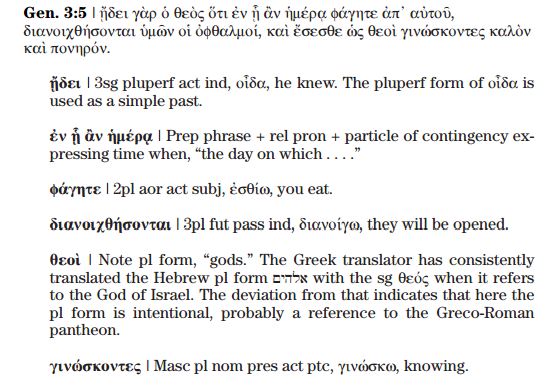
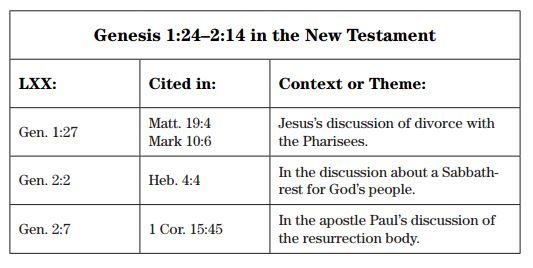

 If one is looking for a more supplemented guide to reading Koine Greek than, for instance, the Greek New Testament: A Reader’s Edition, one might also consider McLean’s Hellenistic and Biblical Greek: A Graded Reader, which is the same price as Discovering the Septuagint. Not only that, but it includes a number of texts drawn from the Septuagint, along with the New Testament, Apocrypha, Church Fathers, Hellenistic literature, and even papyri and inscriptions. As a result, you get to read about the “everyday life of Hellenistic Greeks, with themes such as sexuality, slavery, magic, apocalypticism and Hellenistic philosophy” from a much wider selection of Koine Greek texts.
 Septuaginta &c.